If you’re planning a fishing trip on the Gold Coast, you’ve probably come across two big options: reef fishing and deep sea fishing. Both sound exciting, both can put a serious bend in your rod, but they offer very different experiences.
I like to think of it this way: reef fishing is about working the structure and chasing quality table fish, while deep sea fishing takes you further offshore in search of bigger, faster pelagic species. So, which one deserves your next free Saturday?
Reef Fishing Charters vs Deep Sea Fishing: The Basic Difference
Before you book anything, it helps to understand what actually separates the two.
Reef Fishing Charters generally focus on fishing around offshore reefs, rocky structures, drop-offs and other areas where fish gather. I’m usually looking for species such as snapper, kingfish, cobia, teraglin, tailor and flathead, depending on the season, tides and conditions.
Deep sea fishing takes the boat further offshore and focuses more heavily on open-water and pelagic species. That can mean chasing mahi mahi, Spanish mackerel, tuna or marlin. The water gets wider, the runs can get harder and suddenly your reel starts making noises that sound suspiciously like your bank account.
Quick comparison
| Feature | Reef Fishing Charters | Deep Sea Fishing |
| Main fishing area | Offshore reefs and structure | Wider offshore waters |
| Typical targets | Snapper, kingfish, cobia, flathead, teraglin | Tuna, mahi mahi, mackerel, marlin |
| Fishing style | Bottom and structure fishing | Trolling and pelagic fishing |
| Water | Reef and deeper coastal areas | Deeper offshore water |
| Best for | Variety and quality eating fish | Bigger, faster pelagic action |
| Experience | Great for beginners and experienced anglers | Better suited to anglers chasing serious offshore action |
| Main attraction | Finding fish around structure | Covering wider water for pelagic species |
The important thing is that neither option is automatically “better” than the other. I’d choose based on the type of fishing experience you actually want.
What Happens on Reef Fishing Charters?
When I head out for a reef session, the goal isn’t simply to drive offshore and throw a line into the ocean.
I want to find productive structure.
Fish often hold around reefs, ledges, drop-offs and other underwater features because these areas can provide food, shelter and current. That gives the skipper something to work with instead of simply hoping a fish happens to swim underneath the boat.
On the Gold Coast, reef fishing can produce a seriously impressive mix of species. Depending on the conditions, you might want to target:
- Snapper
- Yellowtail kingfish
- Cobia
- Teraglin
- Tailor
- Flathead
- Mackerel
- Other reef and pelagic species
That variety makes reef fishing particularly appealing when you want a genuine fishing day rather than one very specific target.
What Makes Deep Sea Fishing Different?
Deep sea fishing changes the game because I’m not simply looking for reef structure.
I’m heading further offshore and looking for fish that spend more of their time moving through open water.
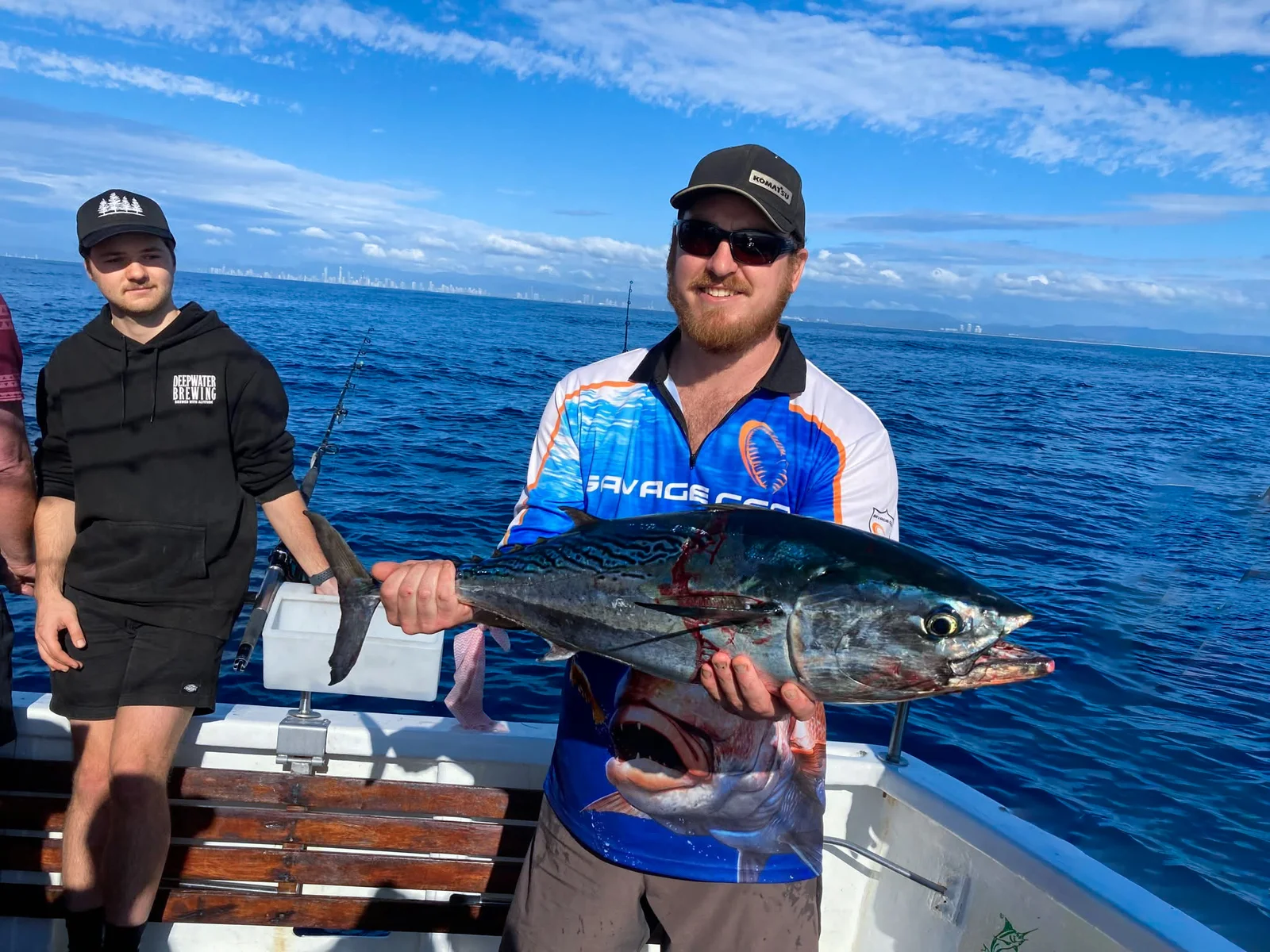
That includes powerful pelagic species such as tuna, mahi mahi, Spanish mackerel and marlin. These fish can cover huge areas, move quickly and hit a lure or bait with enough enthusiasm to wake up everyone on the deck.
This style of fishing often involves trolling, covering ground and watching for signs of feeding fish, bait schools, current changes or other clues that suggest predators are nearby.
And what if something really large decides to eat?
You’ll know.
Reef Fishing Charters or Deep Sea Fishing: Which Has Better Fish?
This is where things get interesting.
I wouldn’t say one has “better” fish. They simply offer different targets.
If you want quality eating fish and enjoy the anticipation of working a reef, I’d lean towards reef fishing charters. Snapper, kingfish and cobia can provide excellent fights while also making a very welcome appearance at dinner.
If your main goal involves chasing speed, power and larger pelagic species, deep sea fishing becomes much more attractive.
Think of it like choosing between a great steak dinner and a hot curry. Asking which one is better misses the point. Sometimes you want one, sometimes you want the other.
Gold Coast Reef Fishing Charters Gives You More Variety
One of the biggest advantages I see with reef fishing charters is variety.
You can start the morning targeting one species and suddenly find yourself dealing with something entirely different. That unpredictability keeps the day engaging.
Gold Coast offshore reefs can produce snapper, kingfish, cobia, teraglin, tailor and flathead, while mackerel and other pelagic fish can also show up when conditions are right.
That means I don’t need to obsess over one species to have a successful day. I can adapt to what the water is doing.
And that matters because the ocean rarely follows your carefully written itinerary.
Deep Sea Fishing Is About Going Bigger and Wider
Deep sea fishing appeals to a different kind of angler.
I want more open water, more distance from the coastline and the chance to encounter fish that can turn an ordinary morning into a proper battle.
Pelagic fishing also creates a different rhythm. Instead of sitting over one structure for long periods, I may cover more ground while searching for active fish.
When tuna, mackerel, mahi mahi or marlin show up, the atmosphere on the boat changes quickly.
Everyone suddenly becomes very interested in the same rod.
Which Fishing Charter Is Better for Beginners?
If you’ve never spent much time offshore, I’d generally recommend starting with a reef-focused trip.
Why?
This way, you can experience genuine offshore fishing without making the entire day about chasing one particular trophy species.
You can learn how to handle the rod, understand bait presentation, feel a bite, manage a fish near the boat and get comfortable with the movement of an offshore vessel.
That doesn’t mean beginners can’t enjoy deep-sea fishing. Far from it. A good skipper can guide first-timers through the process.
However, if you’re entirely new, I think a varied reef session can make the learning curve feel a little friendlier.
Don’t Forget Queensland Fishing Rules
No matter which style you choose, I always recommend checking the current Queensland fishing rules before heading out. Size limits, possession limits, closed seasons and fishing gear restrictions can apply to different species and locations, so I never rely on old fishing advice. For the latest regulations and official fisheries information, check the Queensland Government recreational fishing rules.
That small bit of preparation helps you fish responsibly and avoid an unpleasant surprise when you get back to shore.
Which Trip Gives You More Action?
There’s no guaranteed answer because fishing depends on conditions.
Weather, tides, water temperature, bait movement, currents and seasonal fish behaviour can all influence what happens on the day.
That’s why I don’t judge a fishing charter purely by the species list.
A successful offshore trip involves adapting.
If the fish aren’t cooperating, I’d rather move, change the approach and keep looking than stubbornly fish an empty patch of water because the original plan looks promising on paper.
That flexibility can really help.
Reef Fishing Charters vs Deep Sea Fishing: Which Should You Book?
Here’s my simple way of deciding.
Choose reef fishing charters if you:
- Want a wide variety of species
- Enjoy bottom fishing and working structure
- Want quality eating fish
- Are new to offshore fishing
- Prefer a balanced fishing experience
- Want to fish around productive Gold Coast reef systems
Choose deep sea fishing if you:
- Want to chase powerful pelagic species
- Have your sights set on tuna, mahi-mahi or marlin
- Enjoy covering more offshore water
- Want a more serious big-fish challenge
- Like the excitement of trolling and fast-moving targets
If you’re still sitting on the fence, don’t overthink it. Think about the fish you want to catch and the kind of story you want to tell when you get home.
What Should You Bring on a Gold Coast Fishing Charter?
The good news? You don’t need to turn your car into a mobile tackle shop.
A well-equipped charter can supply the essential fishing gear, bait and tackle, so you can focus on actually fishing.
I’d personally turn up with:
- Sunscreen
- A hat
- Comfortable clothes
- Polarised sunglasses if you have them
- Water
- A decent attitude – preferably one that survives a few missed bites
It’s also worth checking the specific requirements of your chosen trip before departure.
The less time you spend worrying about equipment, the more time you can spend watching that rod tip.
Why the Skipper Matters More Than You Think
You can have the fanciest boat in the marina, but local knowledge still matters.
I want a skipper who understands tides, currents, reef structure, weather changes and seasonal fish movement. Those details can influence where we fish and how we approach the day.
On a Gold Coast charter, local knowledge can also help you make the most of the time available.
A skipper can change locations, adjust tactics and respond to what is happening on the water. That’s especially valuable when conditions change during the trip.
Good fishing isn’t always about having the most expensive gear.
Sometimes it’s simply about knowing where to put it.
Reef Fishing Charters vs Deep Sea Fishing: The Final Verdict
So, Reef Fishing Charters vs Deep Sea Fishing – which wins?
For variety, quality eating fish and a balanced offshore experience, I’d choose reef fishing charters. You can target species such as snapper, kingfish, cobia and flathead while learning how offshore structure affects fish behaviour.
For bigger pelagic targets and the thrill of heading further offshore, deep sea fishing has its own serious appeal. Tuna, mahi mahi, mackerel and marlin can deliver the kind of fight that makes your arms question your life choices.
Ultimately, I’d match the trip to your goal rather than chasing whichever option sounds more impressive.
If you want to experience productive Gold Coast offshore fishing, choose your target, check the conditions and get on the water with a skipper who knows the grounds. Book Your Guided Fishing Trip Today and get ready for a proper day offshore.
Frequently Asked Questions
Is reef fishing better than deep sea fishing?
Neither is automatically better. Reef fishing suits anglers who want variety and species such as snapper, kingfish and cobia, while deep sea fishing suits people chasing pelagic species such as tuna, mahi mahi and marlin.
What fish can I catch on reef fishing charters on the Gold Coast?
Depending on the season and conditions, you may target snapper, kingfish, cobia, teraglin, tailor, flathead, mackerel and other offshore species.
Is deep sea fishing good for beginners?
Yes. Beginners can enjoy deep sea fishing with guidance from an experienced skipper. However, a reef-focused trip can provide a more varied introduction to offshore fishing.
Do reef fishing charters provide fishing gear?
Many professional charters provide rods, reels, bait and tackle. Always check what your particular trip includes before booking.
How far offshore does deep sea fishing go?
The distance varies according to the target species, weather, sea conditions and the skipper’s plan for the day. Deep sea trips generally head further offshore than reef-focused trips.
What is the best time for reef fishing on the Gold Coast?
There isn’t one universal best day or time. Tides, weather, water temperature, seasonal movements and bait activity can all influence fishing conditions. An experienced local skipper can adjust the plan accordingly.
Can I catch big fish while reef fishing?
Absolutely. Reef areas can produce powerful species such as kingfish and cobia, while mackerel and other pelagic fish may also appear depending on conditions.
Should I choose a private or shared fishing charter?
A shared charter can work well for solo anglers, couples and smaller groups. A private charter gives your group more control over the experience and can suit families, mates, corporate groups or anglers who want a more personalised trip.
What should I bring on a Gold Coast fishing charter?
I’d bring sunscreen, a hat, comfortable clothing, sunglasses and plenty of water. Check your charter details beforehand because the operator may already provide rods, reels, bait, tackle, ice and fish cleaning.